
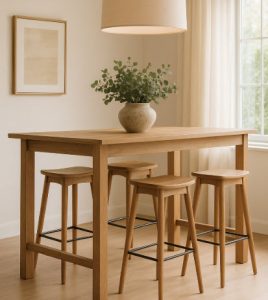
 It wasn’t too long ago that dining tables followed a script: standard height, straight-backed chairs, a formal air. But lately, something interesting has happened. Dining has risen, literally.
Counter-height dining, once the domain of kitchen islands and casual cafes, has made its way into the heart of home design. More and more, people are swapping traditional table setups for taller, more relaxed alternatives. And it’s not just about looks. It’s about lifestyle.
So what’s driving this shift upward? And what does it say about how we live, eat, and gather?
A New Kind of Casual
At its core, counter-height dining supports a more flexible, fluid way of living. It sits somewhere between sitting and standing, formal and informal. People perch, lean, tuck in for a quick lunch or linger longer with wine and conversation.
This table style is ideal for multitaskers. It’s the perfect zone to prep a salad, help with homework, sip coffee, or scroll through a playlist. It’s kitchen table meets social hub.
And because it’s taller, it allows for easier flow in open-concept spaces. You can transition from kitchen to dining to conversation without that abrupt visual or physical shift. It all just works.
Design That Feels Light but Elevated
Function aside, counter-height tables bring a surprising amount of design versatility.
They tend to have a lighter footprint visually, especially when paired with slim-leg stools or backless seating. This is a big win for small apartments or tight dining corners where bulkier pieces can feel overwhelming.
You’ll find these tables in finishes that suit nearly every taste: matte black metal, raw oak, whitewashed pine, ceramic tops, even concrete. Whether your style is industrial loft or earthy modern, there’s a counter-height piece that blends in or makes a statement.
Designers also love them for layering. Their extra height creates a tiered look in a room with mixed seating, which adds interest and movement, especially in open layouts.
Seating That Encourages Conversation
Something subtle shifts when people sit a little higher. There’s a more relaxed energy, like you’ve dropped the idea of a formal meal and just started hanging out.
Stools without arms allow people to pivot more easily. Footrests help guests feel grounded. And since the seats are typically taller, people feel more on eye level whether others are standing or sitting nearby.
This makes counter-height dining especially great for entertaining. Guests flow in and out, people gather around in smaller clusters, and no one feels locked into a place setting.
A Sign of How We Live Now
The rise of counter-height dining isn’t just a design choice. It’s a cultural one.
We’re cooking and eating in the same spaces where we text, host, work, and unwind. Our homes have fewer walls and more overlap. We want spaces that feel open, social, and adaptable.
This style of table fits right in. It honors the idea that dining isn’t a ritual reserved for special occasions. It’s something woven into the everyday, a bit elevated, always evolving, and more about presence than presentation.
So whether you’re in a compact city flat or a breezy modern farmhouse, a counter-height table might just be the new centerpiece you didn’t know you needed.